
- Description
- Curriculum
- FAQ
- Reviews
Citadel Cloud Management offers a comprehensive curriculum focused on Amazon Web Services (AWS), aimed at equipping professionals with the skills and knowledge required to effectively manage and utilize AWS cloud resources. This curriculum is designed to cater to both newcomers and experienced IT professionals seeking to enhance their expertise in AWS.
Curriculum Content:
1. Introduction to Amazon Web Services (AWS):
– Overview of AWS and its global infrastructure.
– Introduction to core AWS services such as EC2, S3, RDS, Lambda, and VPC.
2. Resource Management and Deployment:
– Techniques for provisioning and configuring AWS resources using the AWS Management Console, AWS CLI, and AWS SDKs.
– Strategies for managing costs, including budgeting, cost monitoring, and optimization practices.
3. Security and Compliance:
– Implementing security best practices in AWS, including data encryption, network security, and identity management.
– Managing IAM roles, policies, and permissions to control access to AWS resources.
– Ensuring compliance with industry standards and regulations through AWS Compliance Center.
4. Networking and Connectivity:
– Configuring AWS networking components such as VPC, subnets, route tables, and security groups.
– Implementing advanced networking solutions including VPN, Direct Connect, and AWS Global Accelerator.
5. Monitoring and Management:
– Utilizing AWS CloudWatch and AWS CloudTrail for monitoring resource performance, logging, and auditing.
– Setting up alarms, dashboards, and automated responses to maintain operational efficiency.
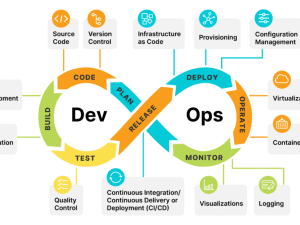
6. Automation and DevOps:
– Introduction to Infrastructure as Code (IaC) using AWS CloudFormation and Terraform.
– Implementing continuous integration and continuous deployment (CI/CD) pipelines using AWS CodePipeline and AWS CodeBuild.
7. Advanced Topics:
– Exploring advanced AWS services such as AWS SageMaker for machine learning, AWS Redshift for data warehousing, and AWS Elastic Beanstalk for application deployment.
– Techniques for optimizing application performance, scalability, and high-availability solutions.
Pros:
– Comprehensive Content: The curriculum provides a thorough exploration of AWS services and best practices, offering a well-rounded understanding of cloud management on the AWS platform.
– Hands-On Learning: The course emphasizes practical, hands-on exercises that enable learners to apply theoretical knowledge to real-world scenarios, enhancing their practical skills.
– Certification Preparation: The curriculum aligns with AWS certification objectives, making it a valuable resource for those preparing for certifications such as AWS Certified Solutions Architect, AWS Certified Developer, or AWS Certified SysOps Administrator.
– Expert Instructors: Citadel’s instructors bring significant AWS expertise and real-world experience, providing valuable insights and practical advice throughout the course.
Cons:
– Cost Considerations: The course may involve a significant financial investment, so potential learners should evaluate whether the cost fits within their budget and aligns with their professional development goals.
– Complexity for Beginners: The breadth of AWS services and concepts covered may be challenging for individuals who are new to cloud computing or AWS, potentially requiring additional foundational resources.
– Pace Variability: Learners’ experience levels can affect how well they keep pace with the curriculum, which may necessitate additional study or support for some participants.
Conclusion: FACTORS THAT DETERMINE DOMAINS IN THE CLOUD
Compute
Storage
Database
Migration
Network and Content Delivery
Management Tools
Security Identity and Compliance
Messaging
CLOUD COMPUTING ON AWS
Compute, Load Balancing, Autoscaling
Storage, Replication and Life Cycle
Management
AWS Organization and Identity
Networking and Data migration
MANAGED SERVICES ON AWS
Databases (RDS, DynamoDB)
Web Application Firewall
SNS, SQS, Cloudwatch
Athena, Quicksight and Kinesis
Serverless (Lambda)
CONTAINERS | APPLICATION DEVELOPMENT AND MIGRATION
Docker
Elastic Container Service (ECS)
Architecture & DevOps
Platforms
Data & Databases
Deployment Pipeline (AWS Code Commit,
AWS Code Deploy, AWS Code Pipeline)
Terraform (Infrastructure as Code)
SOLUTION ARCHITECT
Networking
Managed Services Overview
Security
Program Positioning: Citadel Applied Outcomes Framework
This offer is structured around three outcomes: delivery speed, operational resilience, and audit-ready governance. The content is implementation-first and mapped to production execution standards.
Who This Is For
- Cloud Engineer
- Platform Engineer
- Security Engineer
Prerequisites
- Basic networking (DNS, TLS, HTTP)
- Linux/CLI fundamentals
- Version control and CI fundamentals
Learning Outcomes
- Design target-state architecture with explicit trade-off reasoning.
- Implement secure, repeatable delivery workflows with measurable controls.
- Translate technical execution into business and compliance outcomes.
Course Structure
- Foundations and scope definition
- Architecture and control design
- Hands-on labs, scenario drills, and review checkpoints
- Capstone evidence package and final assessment
Expected Deliverables
- Reference architecture diagram and decision record
- Operational runbook with rollback steps
- Validation checklist mapped to acceptance criteria
Success Metrics
- Deployment lead time
- Change failure rate
- Mean time to recovery (MTTR)
- Cost-per-environment efficiency
Official Resource References
Certification and Credential Pathways
Professional Learning Blueprint
Who this is for: Cloud architects, platform engineers, and DevSecOps teams building on AWS.
Learning Objectives
- Design secure, resilient AWS architectures using Well-Architected guidance
- Implement operational controls for reliability, cost, and governance
- Translate architecture decisions into measurable service outcomes
Prerequisites
- IAM and networking fundamentals
- Linux and scripting basics
- CI/CD familiarity
Module Breakdown
- Landing zone and account governance
- Network and identity security patterns
- Workload reliability and resilience design
- Cost optimization and FinOps controls
- Observability and incident management
Assessments
- Well-Architected gap review
- Architecture decision record set
- Runbook and DR validation
Use Cases
- Enterprise implementation and modernization initiatives
- Security, compliance, and governance programs
- Team enablement and capability acceleration
Reference Library

-
1
 AWS Cloud Computing Overview
Cloud computing is the on-demand delivery of IT resources over the internet, typically with a pay-as-you-go pricing model. Instead of purchasing, owning, and maintaining physical data centers and servers, businesses can access computing services—such as computing power, storage, and databases—on an as-needed basis from cloud providers like Amazon Web Services (AWS).
-
2
AWS Citadel Mentorship Curriculum
-
3
AWS Security, Identity, & Compliance services
-
4
AWS Storage and Database
-
5
AWS Load balancer: Application Load Balancers and Network Load Balancers
This curriculum is designed to help you learn about Elastic Load Balancing (ELB) in AWS, with a focus on Application Load Balancers (ALB) and Network Load Balancers (NLB), as well as how they integrate with Amazon ECS (Elastic Container Service). The curriculum will cover the concepts, configurations, and implementation details required for using these load balancers effectively.
-
6
AWS Containers: Application Development and Migration
This curriculum is designed to provide an in-depth understanding of containerization technologies—AWS Containers, Docker, Kubernetes, and Helm charts—and their integration with AWS services for both application development and cloud migration. It will guide you through using containers to modernize legacy applications, migrate workloads to AWS, and deploy containerized applications in scalable environments.
-
7
Amazon Q Business, Bedrock and Titan Embeddings
This curriculum aims to provide a comprehensive understanding of AWS Q Business, AWS Bedrock, and AWS Titan Embeddings, highlighting their roles in business solutions, generative AI applications, and machine learning. You will learn how to implement these services for various business needs, from AI-powered decision-making and automation to leveraging foundational models and embeddings for custom applications.
-
10
Introduction to AWS Big Data
The AWS Big Data Curriculum is designed to help individuals and teams master the key AWS services required for efficient big data processing, analysis, and visualization. By gaining expertise in these services, users will be equipped to handle large-scale data analytics, perform real-time data processing, and implement machine learning models at scale.
-
11
Big Data Storage and Warehousing
To design a comprehensive big data storage and warehousing solution, we can use a combination of AWS services. Below is a breakdown of each component in the architecture, configuration steps, and resources for implementation.
-
12
Big Data Processing & Analytics
To design an efficient and scalable data processing and analytics pipeline, we can use a combination of AWS services that enable batch processing, real-time data analytics, and machine learning. Below is an in-depth overview of the tools and services for building a comprehensive data pipeline on AWS.
-
13
Big Data Visualization & Reporting
Big data visualization and reporting tools are essential for turning complex data into actionable insights. AWS provides a comprehensive suite of services and tools that enable users to visualize and report on large datasets efficiently. These tools include Amazon QuickSight, AWS Glue DataBrew, Kibana with Amazon OpenSearch, and Tableau Integration with AWS. Below is an in-depth look at these tools, their features, implementation steps, and resources.
-
14
Big Data Security & Governance
In today’s world, where data is one of the most valuable assets, ensuring robust security and governance for big data is essential. AWS provides a variety of security services and best practices that help ensure data protection, access control, threat detection, and compliance. The services include AWS IAM for identity management, AWS KMS for encryption, AWS WAF for web application security, Amazon GuardDuty for threat detection, and AWS Config for compliance.
-
15
Big Data for Machine Learning & AI Integration
Machine Learning (ML) and Artificial Intelligence (AI) play a critical role in transforming data into actionable insights. AWS offers a suite of services that allow you to easily integrate ML and AI into your big data workflows. By combining Amazon SageMaker for model training, AWS Lambda for inference, Amazon S3 for model storage, and AWS Step Functions for workflow orchestration, you can build scalable and efficient ML workflows. Below, we'll break down the architecture and provide detailed steps for implementation.
-
16
Big Data Streaming & Real-time Data Processing
Real-time data processing is critical for applications that require timely analysis and quick decision-making. AWS provides a robust set of services for ingesting, processing, and analyzing streaming data. Key services for this use case include Amazon Kinesis Data Streams, Amazon Kinesis Data Analytics, AWS IoT Analytics, and Apache Kafka on AWS (MSK). These services work together to form a powerful streaming and real-time analytics pipeline.
-
17
Big Data Monitoring & Logging
Effective monitoring and logging are essential for maintaining the health, security, and performance of your AWS infrastructure. AWS provides a robust suite of tools for monitoring, tracking, and logging application and infrastructure metrics, as well as detecting and troubleshooting issues. These tools include Amazon CloudWatch, AWS X-Ray, AWS CloudTrail, and AWS Trusted Advisor. Let's delve into each of these tools with implementation steps and resources.
-
19
Architecture: Designing Scalable Big Data on AWS
Designing a scalable Big Data architecture for FinTech on AWS requires careful planning and a deep understanding of AWS services. By focusing on the end-to-end data pipeline, fault tolerance, and cost optimization, while following best practices for data lake architecture, real-time streaming, and security, you can build a robust and efficient Big Data system for financial applications.
By leveraging AWS tools and services like Kinesis, Glue, S3, and Redshift, you can build a scalable, fault-tolerant, and cost-effective solution to handle the massive volume and velocity of financial data.
-
20
AWS Curriculum for FinTech Environment
Overview
This curriculum is designed to help FinTech professionals master AWS services for big data processing, analysis, and visualization. It covers data storage, ETL processes, data processing, analytics, security, and AI/ML integration.
-
21
Introduction to AWS Financial Tech Big Data
-
22
Data Storage and Management in AWS
AWS provides a variety of tools and services to help manage data efficiently. These include storage solutions like Amazon S3, Data Lakes on AWS, and Amazon Redshift, which help organizations manage structured and unstructured data, maintain security, and scale their data architecture as needed. Below, we will dive deeper into these services and walk through the implementation steps.
-
23
ETL and Data Processing on AWS
In this guide, we will elaborate on three essential AWS services used for ETL (Extract, Transform, Load) and data processing: AWS Glue, Amazon EMR, and Amazon Kinesis. We will explore how to use these services to handle data efficiently, from data discovery and transformation to real-time analytics.
-
24
Data Analytics and Visualization with AWS Services
-
25
Data Security, Governance and Compliance
-
26
AI/ML Integration for FinTech